
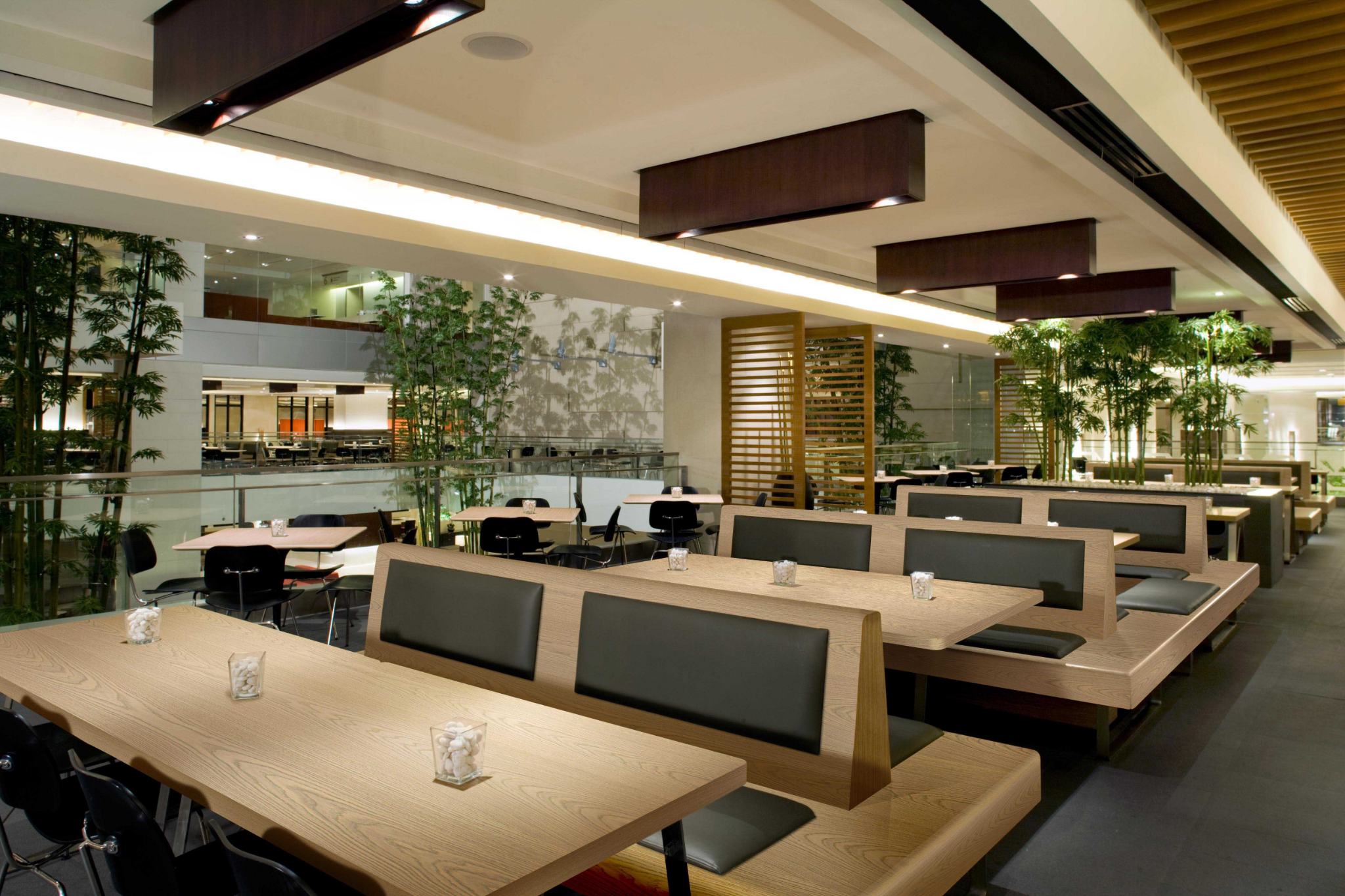
As commercial interiors demand both refined aesthetics and long-term durability, material selection plays a central role in meeting both performance and budget expectations. This is where wood veneers fit in. Offering the warmth of natural wood at much more affordable prices, wood veneers allow commercial spaces to achieve a premium aesthetic without the unpredictability or expense of solid timber. In this article, we will explain why wood veneers are a top choice in commercial interiors, their different types and applications, along with key design and maintenance considerations. Let’s start with understanding the basics.
Also Read: 4 Commercial Spaces to Use Engineered Wood Veneers
What are Wood Veneers?
Wood veneers are thin slices of real wood applied over stable base materials such as engineered wood panels. This construction method enables designers to achieve the appearance of solid timber while benefiting from greater control and consistency.
Types of Wood Veneers
Wood veneers are broadly classified into two categories: natural wood veneers and engineered (reconstituted) veneers, each serving distinct design and functional purposes.
- Natural Wood Veneers: Natural wood veneers are sliced directly from logs, preserving the authentic grain tonal variations, and subtle imperfections that give wood its organic character. These veneers bring warmth and individuality to a space and are often chosen for areas where a more tactile, nature-led expression is desired.
- Engineered Wood Veneers: Also known as recon veneers, these are manufactured from fast-growing timbres that are dyed and reassembled to form consistent grain patterns. This process allows for precise control over colour, repetition, and pattern alignment, making engineered veneers particularly well suited to large commercial installations. When used over engineered wood for furniture or wall panels, they ensure visual uniformity across expansive surfaces while offering the durability and predictability required in high-traffic environments.
Why Veneers are Preferred Over Solid Wood
In commercial interiors, veneers offer the visual appeal of timber with far greater control and reliability than solid wood.
- Greater dimensional stability and duray: The multi-layered construction of veneers improve their stability across changing temperatures and humidity levels.
- Reduced risk of warping or cracking: Engineered construction limits natural movement seen in solid wood.
- Easier replication across large surfaces: Consistent grain and tone can be maintained at scale.
- More efficient use of natural resources: Veneers maximise yield from each log, supporting responsible material use.
- Better compatibility with commercial substrates and finishes: Veneers integrate seamlessly with engineered wood and modern finishes.
Why Wood Veneers Work So Well in Commercial Interiors
The appeal of veneers in commercial design lies in their ability to balance aesthetics with functionality.
Key Advantages
- Visual warmth without heaviness: Veneers introduce the richness of wood without overwhelming the space.
- Material efficiency and responsible use: Veneers maximise yield from timber resources.
- Design consistency at scale: Veneers, particularly engineered veneers, ensure design consistency in large-scale applications, particularly important in offices, hotels, and retail chains.
- Compatibility with modern construction: Works seamlessly with metal, glass, stone, and composite materials.
- Balanced cost and performance: Premium appearance without the limitations of solid wood.
Applications of Wood Veneers in Commercial Spaces
Rather than being confined to specific elements, wood veneers are used across diverse commercial settings.
Common Applications by Space Type
- Corporate offices and boardrooms: Veneer wall panelling, partitions, executive desks, and storage units.
- Hospitality lobbies, corridors, and guestrooms: Feature walls, reception desks, headboards, and built-in cabinetry.
- Retail interiors and brand environments: Display units, wall cladding, counters, and fitting rooms.
- Healthcare and wellness environments: Warm, calming surfaces in waiting areas and consultation rooms.
- Public and semi-public spaces: Auditoriums, lounges, and institutional interiors.
In many of these environments, engineered wood paired with veneers ensures furniture that is both durable and consistent in design.
Surfaces on Which Wood Veneers Can Be Used
Wood veneers are highly versatile and suitable for a wide range of engineered wood furniture and interior surfaces, including:
- Partitions and screens
- Doors and frames
- Fixed and loose furniture
- Reception desks and counters
This flexibility allows veneers to create a cohesive design language across the entire space.
Design Principles for Using Wood Veneers in Commercial Interiors
The following principles highlight how designers can use veneers not just decoratively, but architecturally.
- Achieving Design Consistency at Scale with Engineered Wood Veneers
In large commercial projects, maintaining visual consistency across multiple zones is often a challenge. This is where engineered wood veneers prove especially effective. Their controlled grain structure and uniform colour allow surfaces to flow seamlessly from one area to another, making them well suited to expansive wall panelling and large furniture systems.
- Creating Depth and Dimension Through Textured Veneers
Texture plays a crucial role in preventing large surfaces from appearing flat or monotonous. Introducing textured wood veneer allows designers to add depth without relying on strong colour contrasts. Profiles such as flutes, slates, pleats, and bevels in Mikasa Decowood Veneer’s catalogue interact subtly with light, creating gentle shadow play that brings movement to otherwise flat surfaces. When paired with directional or grazing lighting, these textures enhance spatial depth while remaining understated.
- Introducing Organic Warmth with Natural Veneers
While consistency is important, commercial interiors also benefit from moments of warmth and authenticity. Natural veneers are best used selectively in areas such as lounges, boardrooms, and feature walls, where a more tactile, natural presence is desirable. The inherent grain variation found in natural wood adds character and individuality, particularly when balanced with neutral palettes and restrained material choices. Rather than seeking perfect uniformity, the variation becomes part of the design story.
- Defining Identity Through Veneer Design Patterns
Veneer patterns have the power to define identity within a space. Linear and radial compositions, along with signature patterns such as Regal, Rays, Crest, and Vortex, in Mikasa Decowood Veneer’s range introduce visual rhythm and hierarchy. Techniques like book-matching and slip-matching further enhance this effect, creating surfaces that feel intentional and considered. These patterned applications work especially well in reception areas and brand-defining zones, where first impressions matter.
- Creating a Timeless Appeal with Teak Veneers
Teak veneers continue to be favoured in commercial interiors for their rich tone and timeless appeal. Their natural warmth lends itself equally well to classic and contemporary environments, making them a versatile design choice. More expressive interpretations, such as embossed, metallic, or rustic finishes in Mikasa Decowood Veneers’ catalogue, are most effective when used sparingly. Treated as focal elements, teak veneers add depth and distinction without overwhelming the overall design language.
- Reinterpreting Classics: Chevron and Herringbone Layouts
Classic layouts such as chevron and herringbone remain relevant because of their ability to introduce movement and structure. Applied to accent walls, vertical surfaces, or transitional spaces, these patterns bring architectural character while maintaining a sense of order. Their directional quality subtly guides the eye, adding rhythm without visual clutter.
- Bespoke Expression Through Photo-Printed Decorative Veneer Sheets
Advances in digital printing have expanded the creative potential of decorative veneer sheets. Photo-printed veneers allow designers to introduce bespoke graphics, textures, or narratives while retaining the tactile quality of real wood. These applications are particularly effective in interiors and feature installations, where storytelling plays a central role in the spatial experience.
- Adding Depth and Sophistication with Smoked Veneers
Smoked veneers offer a refined way to introduce depth and contrast in premium environments. Their darker tones create a sense of intimacy and sophistication, especially when paired with subdued lighting and minimalist material palettes. Used in executive areas, luxury hospitality spaces, or high-end offices, smoked veneers lend gravitas without appearing heavy.
Designing for Performance and Longevity
In commercial interiors, materials are judged not by how they look on day one, but by how well they hold up over years of use. When working with veneers, keep the following design considerations in mind:
- Performance: Resistance to everyday wear is a primary consideration. In high-traffic environments, veneers must withstand minor knocks, abrasion, and regular contact without showing premature damage. The right veneer type and protective finish help preserve surface integrity even in demanding settings.
- Finish Durability: Finish durability becomes equally important where frequent cleaning is unavoidable. Commercial spaces often require daily maintenance, and finishes must tolerate frequent wiping without dulling, peeling, or losing their visual consistency over time.
- Environmental Stability: Environmental stability also plays a decisive role. Changes in temperature and humidity can cause poorly specified materials to move or fail, but well-constructed veneer systems remain dimensionally stable, maintaining their alignment and appearance across seasons.
- Ageing: Finally, there is the question of ageing. Quality natural veneers develop a subtle patina that enhances character, rather than showing patchy wear or fading. This natural evolution allows interiors to mature gracefully, reinforcing the sense of permanence that commercial spaces often seek.
Lighting, Scale, and Spatial Interaction
In commercial interiors, wood veneers do not exist in isolation; they respond continuously to light, proportion, and movement within a space. The same veneer can appear warm and tactile or flat and overwhelming depending on how these elements are handled. Understanding this interaction is essential to achieving visual balance.
- Directional lighting and grain expression: Directional lighting enhances the natural grain of wood veneers, bringing out subtle tonal shifts and surface depth. When planned deliberately, it allows veneers to reveal their character without relying on contrast or ornamentation.
- Grazing light and textured surfaces: Grazing light works particularly well with textured wood veneer, such as fluted or bevelled profiles. By casting soft shadows across the surface, it amplifies depth and adds a sense of movement to otherwise static planes.
- Matte versus gloss finishes: Matte finishes help reduce glare and visual noise in work-focused environments such as offices and meeting rooms. Gloss finishes, used selectively, introduce drama and reflectivity in feature zones like lobbies and reception areas.
- Grain direction and spatial perception: The orientation of veneer grain subtly influences how a space is perceived. Vertical grains can enhance a sense of height, while horizontal layouts create visual calm and continuity across larger areas.
Handled together, lighting, scale, and grain direction prevent visual fatigue and ensure that veneers enhance, rather than dominate, expansive commercial interiors.
Sustainability and Responsible Material Choices
Sustainability in commercial design is increasingly measured not by labels alone, but by how intelligently materials are used. Wood veneers align naturally with this approach, offering both environmental efficiency and long-term relevance.
- Efficient use of timber resources: Veneers allow a single log to cover significantly more surface area than solid wood, making them a materially efficient choice without compromising on visual authenticity.
- Reduced dependence on rare species: Engineered veneers replicate the appearance of sought-after woods while reducing pressure on slow-growing or scarce species. This makes them a responsible alternative for large-scale commercial use.
- Longevity as a sustainability principle: Materials that age well and remain visually relevant reduce the need for frequent replacement. Well-finished veneers develop character over time rather than appearing worn, extending the lifecycle of interiors.
- Engineered veneers and responsible sourcing: Many engineered veneer systems are designed with controlled sourcing and repeatability in mind, supporting more sustainable forestry practices and predictable material planning.
In this context, sustainability becomes less about compromise and more about thoughtful, long-term design decisions.
Maintenance and Operational Considerations
Even the most considered design must perform under daily use. In commercial environments, the success of wood veneers depends as much on maintenance planning as on initial aesthetic intent.
- Cleaning frequency and finish selection: Different finishes respond differently to regular cleaning. Selecting finishes compatible with routine maintenance helps preserve the veneer’s appearance without increasing operational effort.
- High-touch versus low-touch zones: Veneers in reception desks, handrails, and furniture edges experience more wear than wall panels or ceilings. Recognising these distinctions allows designers to specify finishes and detailing accordingly.
- Exposure to natural and artificial light: Prolonged sunlight, particularly in areas with large windows or glass facades, can influence colour stability over time. Selecting appropriate finishes and being mindful of veneer placement helps manage gradual tonal shifts while allowing the material to age evenly.
- Repairability and replacement planning: One advantage of veneer systems is the relative ease of repair compared to solid wood. Planning for modularity and access ensures that minor damage does not require extensive intervention.
- Consistency over time: Thoughtful detailing, such as edge protection and appropriate substrate selection, helps veneers retain visual consistency, even as spaces evolve with use.
By accounting for maintenance early, veneers remain an asset rather than a liability in high-traffic interiors.
A Practical Decision Framework for Designers
Selecting the right veneer solution is ultimately about alignment between design intent, performance expectations, and the realities of use. A simple decision framework can help guide this process.
- Purpose of the space: Whether the environment is meant to energise, calm, or impress should influence veneer selection, pattern, and finish.
- Expected foot traffic: High-traffic areas demand greater durability and finish resilience, while quieter zones allow for more expressive material choices.
- Desired aesthetics: Light-toned veneers often feel open and contemporary, while darker or smoked finishes create gravitas. The aesthetic impact should guide material decisions.
- Budget and visual impact: Veneers allow designers to concentrate visual richness where it matters most, balancing cost without diluting design quality.
- Longevity and upkeep expectations: Understanding how long the space is intended to remain unchanged helps determine whether to prioritise timeless finishes or more expressive design statements.
Wood veneers are far more than decorative finishes. When paired with engineered wood furniture, they become architectural tools, shaping spatial identity, enhancing user experience, and supporting long-term durability in commercial interiors.
From textured wood veneer surfaces to bespoke decorative veneer sheets, veneers offer designers the freedom to create interiors that are warm, refined, and resilient. In spaces that must work hard every day, veneers continue to prove their relevance, quietly, consistently, and beautifully.
Also Read: Tips To Use Decorative Wood Veneer Sheets In Commercial Spaces
About Mikasa Decowood Veneers
Mikasa Decowood Veneers, the decorative veneers brand from Greenlam Industries, has been shaping India’s veneer landscape since 2002. Recognised as a trusted wood veneer supplier, the brand is known for its design-led approach, material integrity, and consistent quality across residential and commercial interiors.
Mikasa Decowood Veneers offers one of the most comprehensive portfolios in the wood veneers category, spanning over 200 wood species. Collections such as Artista, Naturals, Engineered, The Specials, and Teak allow designers to work across varied styles and scales, creating surfaces that feel refined, enduring, and thoughtfully detailed. Explore the collections to discover veneers suited to your space. For product details, samples, or expert guidance, call us at 1800-833-0004, email us at info@mikasaveneers.com, or reach out through the contact form online, and our team will be happy to assist.