
|
Key Takeaways:
|
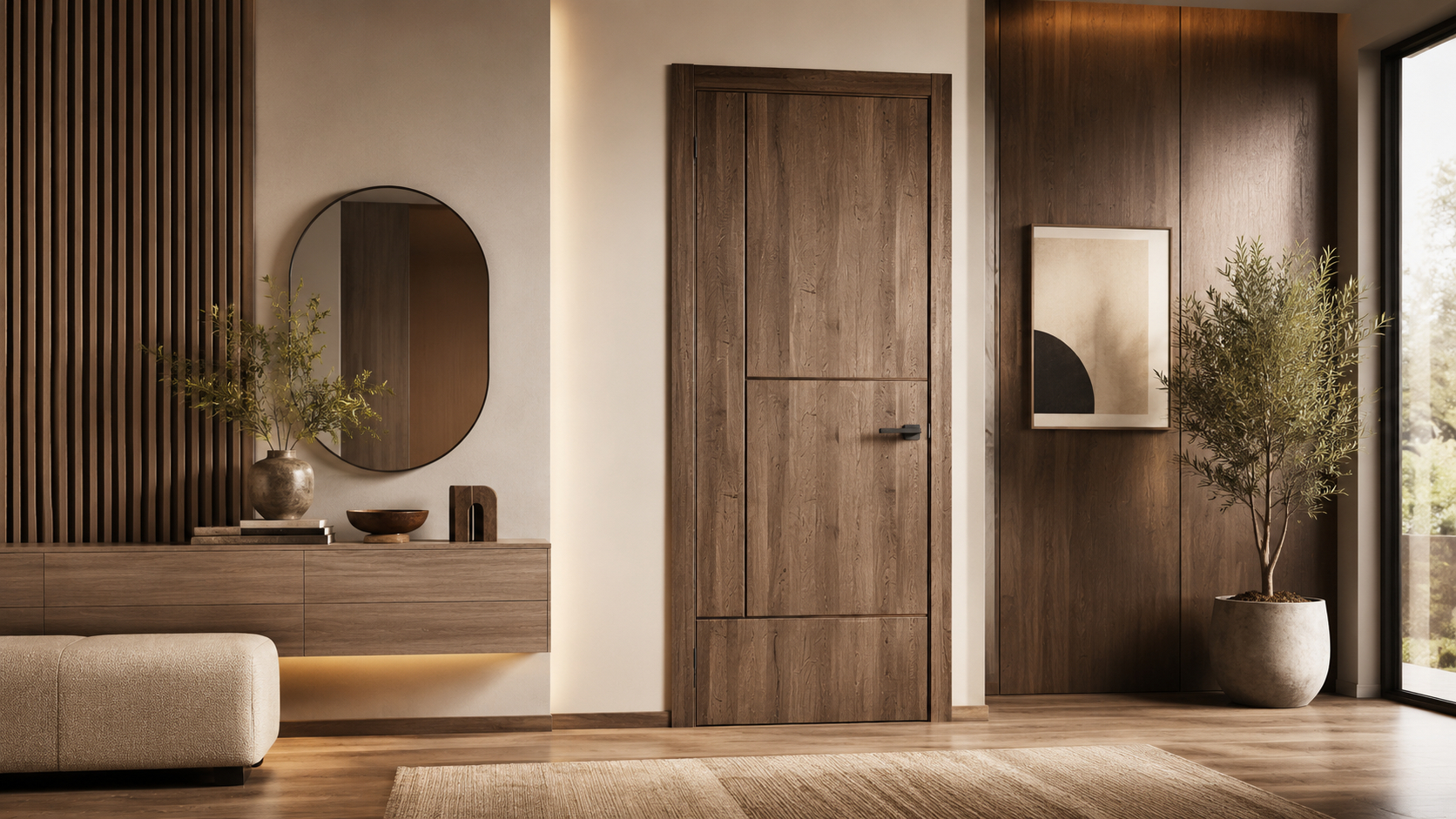
Doors are often seen as purely functional elements, but in a well-designed home, they play a much bigger role. They influence how a room feels, how different spaces connect, and how refined the overall interior looks. The right wood veneer for doors can turn a plain surface into a design feature that adds warmth, texture, and natural elegance. Wood veneer brings the beauty of real wood grains into interiors while allowing homeowners and designers to explore a wide range of grains, tones, textures, and finishes. From subtle bedroom doors to bold statement entrances, veneer can help create interiors that feel more cohesive, premium, and thoughtfully designed. In this article, we will explore how wood veneer doors can transform home interiors. Let’s begin by understanding the role of doors in interior design.
Also Read: 5 Reasons to Choose Veneer Doors over Solid Wood Door Designs
Why Door Design Matters
Doors occupy more visual space than many people realise. In bedrooms, corridors, living areas and common passages, doors are a prominent yet often overlooked element in a space. If they look flat, mismatched, or ordinary, the overall interior can feel incomplete. On the other hand, a beautifully finished door can enhance the design language of the entire home.
A wood veneer door, in particular, can:
- Add natural warmth to modern interiors
- Bring visual depth through grain patterns
- Create continuity with furniture, flooring, and wall panels
- Make plain passages look more refined
- Help main doors and feature doors stand out
- Support both classic and contemporary design themes
This is why choosing the right veneer is not only about selecting a surface material. It is about deciding how the door will contribute to the home’s character.
Adding Natural Warmth with Wood Veneer
One of the biggest advantages of wood veneer is its ability to bring the natural charm of wood into interiors. Unlike flat painted surfaces, veneer carries grain movement, tonal variation, and organic detail. This gives doors a warmer and more inviting appearance.
For homeowners who want interiors that feel calm, elegant, and close to nature, wood veneer can be a strong design choice. Natural wood tones work beautifully in bedrooms, living rooms, family lounges and transitional spaces because they add softness without overwhelming the décor.
For example, natural veneers can bring out the character of different wood species. Veneers closest to their natural form, such as those available in Mikasa’s Naturals range, can offer the richness of real wood grains, including species such as Walnut. These veneers are well-suited for homeowners who want a timeless, natural and refined door finish.
The appeal of natural wood veneer designs lies in their versatility. They can suit a minimal home with clean lines, a warm family home with classic furniture, or a luxury apartment with a more premium interior theme.
Creating a Premium Look with Colored Veneer Sheet
Colour has a major influence on how a room feels. The same door design can look calm, bold, spacious, or dramatic depending on the veneer colour or tone selected. This is why veneer sheet colours or tones should be chosen carefully, keeping the room size, lighting, flooring and furniture in mind.
Different veneer colour directions can create different effects:
- Light veneer tones work well in compact rooms, apartments and modern interiors where openness is important.
- Medium tones are versatile and suit most homes because they balance warmth with subtle elegance.
- Dark veneers, such as smoked or stained veneers, create a bold, premium and luxurious look, especially for main doors, lounges and formal spaces.
- Grey, black, beige, vintage brown, and white tones suit contemporary homes where the design language is more modern and understated.
Coloured veneer collections can also help homeowners move beyond standard wood tones. For example, Mikasa’s Rainbow Collection offers bespoke colour options such as Grey, Classic Beige, White, and Vintage Brown while retaining the beauty of natural grains. Those who want new-age personalised designs can explore digital designs in The Specials collection, which features custom image options for high-quality imprinting on wood veneers.
When choosing veneer sheets colours for doors, it is important to see them in relation to the full interior palette. The door should complement the flooring, wall colour, furniture, wardrobes, handles and lighting. A dark veneer may look beautiful in a large, well-lit room, but it may feel heavy in a compact passage. Similarly, a very light veneer may suit a minimal bedroom but may not create enough impact for a statement entrance.
Using Wood Veneer Designs to Create Statement Doors
Wood veneer designs can be subtle, decorative, or bold, depending on the desired interior effect. A door does not always need to blend into the background. In many homes, it can become a strong design element, especially when used for the main entrance, living room, study, puja room, or master bedroom.
Different veneer designs can create different design moods:
- Natural veneers: Add warmth and uniqueness, as each surface carries its own organic pattern and character.
- Engineered veneers: Offer design consistency, making them useful when the same look is required across multiple doors or larger surfaces.
- Etched wood surfaces: Create 3D visual interest and are suitable for statement doors in premium interiors.
- Designer veneers: Bring an artistic layer to interiors and can be used for doors that are meant to stand out.
For homeowners who want a stronger visual impact, Mikasa Decowood Veneers’ The Specials collection includes handcrafted veneers with textured, patterned, and treatment-led options. Artista offers etched wood surfaces with 3D textures under categories such as Legno and Furrow, making doors feel more like design installations than simple partitions.
Designer veneer collections can also add a distinctive artistic touch. Mikasa’s D’Art Collection, which is part of The Specials range, combines art and technology through designer veneers created using CNC on rare and exquisite wood. Options such as Cascade, Eclat, Nova, Vortex, Sonata, Opulent, Crest, Regal, Shale, Waltz and Iris can be explored for statement surfaces.
The key is to decide where to use bold designs. A textured or decorative veneer may look impressive on a feature door, but using it on every door in the home may reduce its impact. The best approach is to balance statement surfaces with simpler, coordinated doors.
Also Read: Behind the Scenes: How Decorative Wood Veneer Sheets for Doors Are Made
Making Interiors Look More Coordinated with Wood Veneer Doors
A well-designed home should feel connected from one space to another. Doors can help create this sense of visual continuity. When the veneer on doors is chosen thoughtfully, it can tie together different interior elements and make the home feel more polished.
Wood veneer doors can be coordinated with:
- Wooden flooring
- Wall panels
- Wardrobes
- Furniture
- Skirting
- Ceiling details
- Door frames
- Handles and hardware
For example, a bedroom with warm wooden furniture may look more complete with a door in a complementary veneer tone. A living room with wall panelling can feel more refined when the door surface follows a similar wood language. In a passage with multiple doors, using consistent veneer designs can make the area look cleaner and more organised.
Veneer matching techniques can also influence the final look. Book matching can create a mirrored grain effect, while slip matching can offer a more continuous appearance. Reverse slip matching and mix matching can be used when a more varied or natural look is preferred. These details may seem small, but they can make a noticeable difference in the final design.
Elevating Different Spaces with Veneer Doors
Different doors in a home serve different purposes, so they do not all need the same veneer treatment. The best wood veneer for doors should be selected based on where the door is placed and what kind of visual role it needs to play.
- For main doors, richer grains, teak veneers, dark tones or statement designs can create a strong first impression. Teak wood veneers, available across categories such as Divine, Platino, Special, Splendor and Noirwood variants, can be considered for a classic and premium look.
- For bedroom doors, warmer and calmer veneer tones usually work better. These spaces need comfort and relaxation, so subtle grains, medium wood shades or soft natural tones can help create a soothing feel.
- For living room doors, the veneer can be coordinated with furniture, wall panels or display units. This helps maintain a connected design scheme across the most visible part of the home.
- For passage doors, cleaner and more consistent veneer patterns may be preferred, especially when there are several doors in the same line of sight. Engineered wood veneers can help maintain design consistency across such applications.
- For luxury interiors, textured, etched or designer wood veneer designs can add a more exclusive look. These can be used for feature doors, study doors, bar units or private lounges.
- For high-ceiling homes or tall doors, longer veneer formats can help maintain visual continuity. Mikasa’s Perfect 10 collection offers 10-feet veneers, making it suitable for tall doors, high ceilings and large vertical surfaces.
Choosing the Right Finish for the Desired Look
The finish applied to a veneer door affects how it looks, feels and performs over time. Even the most beautiful veneer can lose impact if the finish is not selected properly. A good finish enhances the grain, protects the surface and supports the desired interior style.
Common finish options include:
- Melamine: Often used for a transparent clean and protective surface finish.
- Polyurethane: Suitable when a more durable and refined finish is required.
- Acrylic: Creates a polished appearance for premium interiors.
- Water-based coating: A contemporary finishing option that can be considered for modern applications.
- UV coating: Helps create a finished surface with added protection.
The choice of finish should depend on the door’s usage, location, desired sheen level and maintenance expectations. A door in a high-use area may need a more durable finish, while a decorative feature door may be finished to highlight texture, colour or grain. Professional guidance is important because veneer application and finishing need skill to achieve a clean and long-lasting result.
Wood veneer doors can transform home interiors by adding warmth, texture and a refined natural character to everyday spaces. With Mikasa Decowood Veneers, homeowners and designers can choose from premium veneer options that help create doors that feel elegant, personal and beautifully aligned with the overall interior style.
Also Read: 5 Benefits of Choosing Veneer Doors Over Other Door Finishes
About Mikasa Decowood Veneers
Mikasa Decowood Veneers offers a wide range of premium wood veneer solutions for homes, luxury interiors and design-led spaces. Its collections include Naturals, Engineered, Teak, The Specials, Artista, Rainbow Collection and Perfect 10, giving homeowners and designers the flexibility to choose veneers based on colour, grain, texture, scale and application.
From natural wood grains and consistent engineered patterns to handcrafted textures, etched surfaces and bespoke colours, Mikasa Decowood Veneers brings together design variety and technical quality. With features such as A+ Grade veneers, 5-step preservative treatment, MITT technology, 0.5 mm veneer thickness and 100% hardwood, the brand offers surfaces that can elevate doors, panels, furniture, and other interior applications.
For homeowners looking to transform everyday doors into refined design elements, Mikasa Decowood Veneers offers wood veneer designs that bring warmth, character and timeless appeal to modern interiors. For product inquiries and feedback, call us at 1800 833 0004, email us at info@mikasaveneers.com, or fill out our contact form, and we will get back to you as soon as possible.